Leggings Size Chart: Complete Measurement and Sizing Guide for Accurate Fit
Leggings fit depends on waist and hip measurements plus fabric stretch. Stretchy nylon-spandex blends tolerate more variance than coated or compression fabrics.
AI-generated summary
Leggings sizing errors are one of the most common causes of e-commerce returns in activewear. A size chart that does not match the garment's actual measurements leads to customer frustration, restocking costs, and brand reputation damage. Whether you are a buyer sourcing leggings for your brand or a product developer building a new activewear line, understanding how leggings sizing works at the measurement level is the difference between a well-fitting product and a returns headache.
This guide breaks down the complete leggings sizing framework — from core body measurements to fabric-specific size adjustments, from standard size charts in both inches and centimeters to waistband styles and length variants. You will also get practical guidance for building or calibrating a size chart for custom leggings manufacturing.
Leggings Sizing Systems Explained
Leggings sizing does not follow a single universal standard. Brands choose between two main sizing systems based on their target market and product strategy.
System 1: Numeric Size Range (XXS to 6XL)
This is the most common system for activewear and performance leggings brands. Each size label maps to a specific waist and hip measurement range, typically aligned with standard US pant sizing.
| Size | Approx. US Pant Size | Typical Waist Range (in) |
|---|---|---|
| XXS | 00–0 | 22–24 |
| XS | 2–4 | 24–26 |
| S | 6–8 | 26–28 |
| M | 10–12 | 28–30 |
| L | 14–16 | 30–32 |
| XL | 16–18 | 32–34 |
| 2XL | 20–22 | 34–36 |
| 3XL | 22–24 | 36–38 |
| 4XL | 24–26 | 38–40 |
| 5XL | 26–28 | 40–42 |
| 6XL | 28–30 | 42–44 |
Numeric sizing gives customers a more precise fit and is the preferred system for performance-oriented leggings where compression and support matter.
System 2: One-Size Categories
Some leggings brands use an oversized or "one size fits most" approach, usually grouped into three intervals:
Regular One-Size: Fits US sizes 0–10, with some accommodation for size 12 depending on body shape. Best for standard-stretch fabrics with high elasticity.
Plus One-Size: Fits US sizes 14–22. Designed with more generous hip and thigh room and reinforced waistbands for additional support.
Extended Plus One-Size: Fits US sizes 22–30. Uses higher elastane content and wider waistbands to provide structure and hold across a broader size range.
One-size systems work best for casual and lifestyle leggings where compression and performance fit are not the primary selling points. They reduce SKU count for the brand at the cost of precision fit.
Standard Leggings Size Charts: Inch and Centimeter Measurements
The tables below provide a comprehensive reference for leggings garment measurements across the full size spectrum. These represent industry-standard grading and can serve as a baseline for building or validating a brand-specific size chart.
Universal Leggings Size Chart (Inches)
| Size | Waist (in) | Hip (in) | Total Length (in) |
|---|---|---|---|
| XS | 23.6 | 28.3 | 36.6 |
| S | 25.2 | 29.9 | 37.4 |
| M | 26.8 | 31.5 | 38.6 |
| L | 28.3 | 33.1 | 39.8 |
| XL | 29.9 | 34.6 | 40.6 |
| 2XL | 31.5 | 36.2 | 41.3 |
| 3XL | 33.1 | 37.8 | 42.5 |
| 4XL | 34.6 | 39.4 | 43.3 |
| 5XL | 36.2 | 40.9 | 44.1 |
Universal Leggings Size Chart (Centimeters)
| Size | Waist (cm) | Hip (cm) | Total Length (cm) |
|---|---|---|---|
| XS | 60 | 72 | 93 |
| S | 64 | 76 | 95 |
| M | 68 | 80 | 98 |
| L | 72 | 84 | 101 |
| XL | 76 | 88 | 103 |
| 2XL | 80 | 92 | 105 |
| 3XL | 84 | 96 | 108 |
| 4XL | 88 | 100 | 110 |
| 5XL | 92 | 104 | 112 |
Hip-Referenced Size Chart (Extended Range)
Some brands build their primary size chart around hip circumference rather than waist, since the hip is the widest point and the most critical fit variable for leggings. This extended range covers XS through 6XL.
| Size | Hip (cm) | Hip (in) |
|---|---|---|
| XS | 75–82 | 29.5–32.3 |
| S | 83–89 | 32.7–35.0 |
| M | 90–97 | 35.4–38.2 |
| L | 98–104 | 38.6–40.9 |
| XL | 105–112 | 41.3–44.1 |
| 2XL | 113–119 | 44.5–46.9 |
| 3XL | 120–127 | 47.2–50.0 |
| 4XL | 128–134 | 50.4–52.8 |
| 5XL | 135–142 | 53.1–55.9 |
| 6XL | 143–149 | 56.3–58.7 |
Segment (Merged) Sizing
For brands that prefer fewer SKUs, merged sizing combines adjacent sizes into wider coverage bands.
| Segment | Waist (in) | Hip (in) |
|---|---|---|
| S/M/L | 25–28 | 34–37 |
| M/L | 29–33 | 39–43 |
| XL | 34–39 | 44–49 |
Factory Tip: Merged sizing works well for casual leggings in four-way stretch fabrics. It is not recommended for compression or coated leggings, where the reduced stretch tolerance makes precise sizing more important.
Reference Size Charts by Product Type
Different legging product lines often carry their own size charts tailored to specific design features. The tables below provide representative sizing data for common legging types.
Standard 4-Way Stretch Leggings (Inseam 26–32")
| Size | US Pant | Waist (in) | Inseam (in) |
|---|---|---|---|
| XXS | 00–0 | 22–24 | 26–32 |
| XS | 2–4 | 24–26 | 26–32 |
| S | 6–8 | 26–28 | 26–32 |
| M | 10–12 | 28–30 | 26–32 |
| L | 14–16 | 30–32 | 26–32 |
| XL | 16–18 | 32–34 | 26–32 |
| 2XL | 20–22 | 34–36 | 26–32 |
Performance Compression Leggings
| Size | Waist (in) | Hip (in) | Inseam (in) | Front Rise (in) |
|---|---|---|---|---|
| XS | 23–26 | 33–36 | 25.8 | 8.5 |
| S | 26–28 | 36–38 | 26 | 9 |
| M | 28–31 | 38–41 | 26 | 9.25 |
| L | 31–33 | 41–44 | 26.5 | 9.5 |
| XL | 33–36 | 44–47 | 27 | 10 |
Training & Gym Leggings
| Size | Waist (in) | Hip (in) | Inseam (in) |
|---|---|---|---|
| XS | 24–27.2 | 33.9–35.8 | 26.8 |
| S | 27.2–29.9 | 35.8–38.2 | 27 |
| M | 29.9–33.1 | 38.2–40.2 | 27.2 |
| L | 33.1–35.8 | 40.2–42.9 | 27.4 |
| XL | 35.8+ | 42.9–46.1 | 27.6 |
Full-Body Coverage Leggings (Chest / Waist / Hip Reference)
| Size | Chest (in) | Waist (in) | Hip (in) | Inseam (in) |
|---|---|---|---|---|
| XS | 31–33 | 25–27 | 34–37 | 25 |
| S | 33–35 | 28–30 | 37–39 | 25 |
| M | 35–37 | 31–33 | 39–41.5 | 25 |
| L | 37–39 | 34–36 | 41.5–43 | 25 |
| XL | 39–41.5 | 35–38 | 43–44.5 | 25 |
Leggings Length Variants and Fit Types
Leggings length affects both aesthetics and function. The right inseam depends on the intended use, body height, and the visual proportion the design aims to achieve.
Standard Length Options
Full Length: Inseam reaches to or just below the ankle. Best for cooler weather, high-intensity training, and full leg coverage. Typically 26–32 inches depending on the size grade.
7/8 Length: Inseam stops just above the ankle. A versatile crop that creates a leg-lengthening visual effect. Works across most body types and is a popular everyday activewear cut.
Crop Length: Inseam ends at mid-to-lower calf. Suited for warm-weather training, high-intensity workouts, and styling over sports shoes.
Height-Specific Variants
Petite (Short): Designed for heights under 5'4". Shortened inseam and adjusted front-rise measurements eliminate bunching at the ankle and excess fabric at the crotch.
Tall (Long): Designed for heights 5'8" to 6'. Extended inseam maintains full-length coverage without riding up during movement. Some tall variants also adjust the waist-to-hip ratio for longer torso proportions.
Buyer Check: If you are building a size-inclusive brand, offering petite and tall inseam variants alongside standard lengths significantly reduces fit-related returns across different body heights. The incremental production cost of offering two inseam lengths is usually smaller than the cost of returns from customers who cannot find a length that fits.
Waistband Styles and How They Affect Fit
Waistband design is a sizing variable that many size charts overlook. The waistband determines where the leggings sit on the body, which shifts where the waist and hip measurements land relative to the garment.
Mid-Rise
Sits just below the natural waistline. Balanced coverage that works for everyday wear, casual training, and most body types. Mid-rise waistbands typically measure 3–4 inches in height and provide moderate core support.
High-Waisted
Sits at or above the natural waist. Provides stronger core compression and is less likely to roll down or slide during dynamic movement. High-waisted leggings are the standard choice for high-intensity training, running, and any activity with repeated bending or squatting. The higher waist position means the waist measurement should be taken slightly higher on the torso — roughly 1–2 inches above the belly button — for the most accurate size chart match.
Maternity
Features an expandable, over-belly panel designed to accommodate pregnancy-related body changes. Maternity leggings are worn through all stages of pregnancy and postpartum. The sizing follows pre-pregnancy measurements — a customer who wears a size Medium pre-pregnancy typically selects a Medium in maternity leggings, because the panel is designed to expand with the body.
Factory Tip: When sourcing maternity leggings for your brand, confirm with the factory whether the waistband panel uses the same four-way stretch fabric as the legging body. A panel with less stretch than the leg fabric creates a fit mismatch that leads to returns.
How to Measure for the Best Leggings Fit
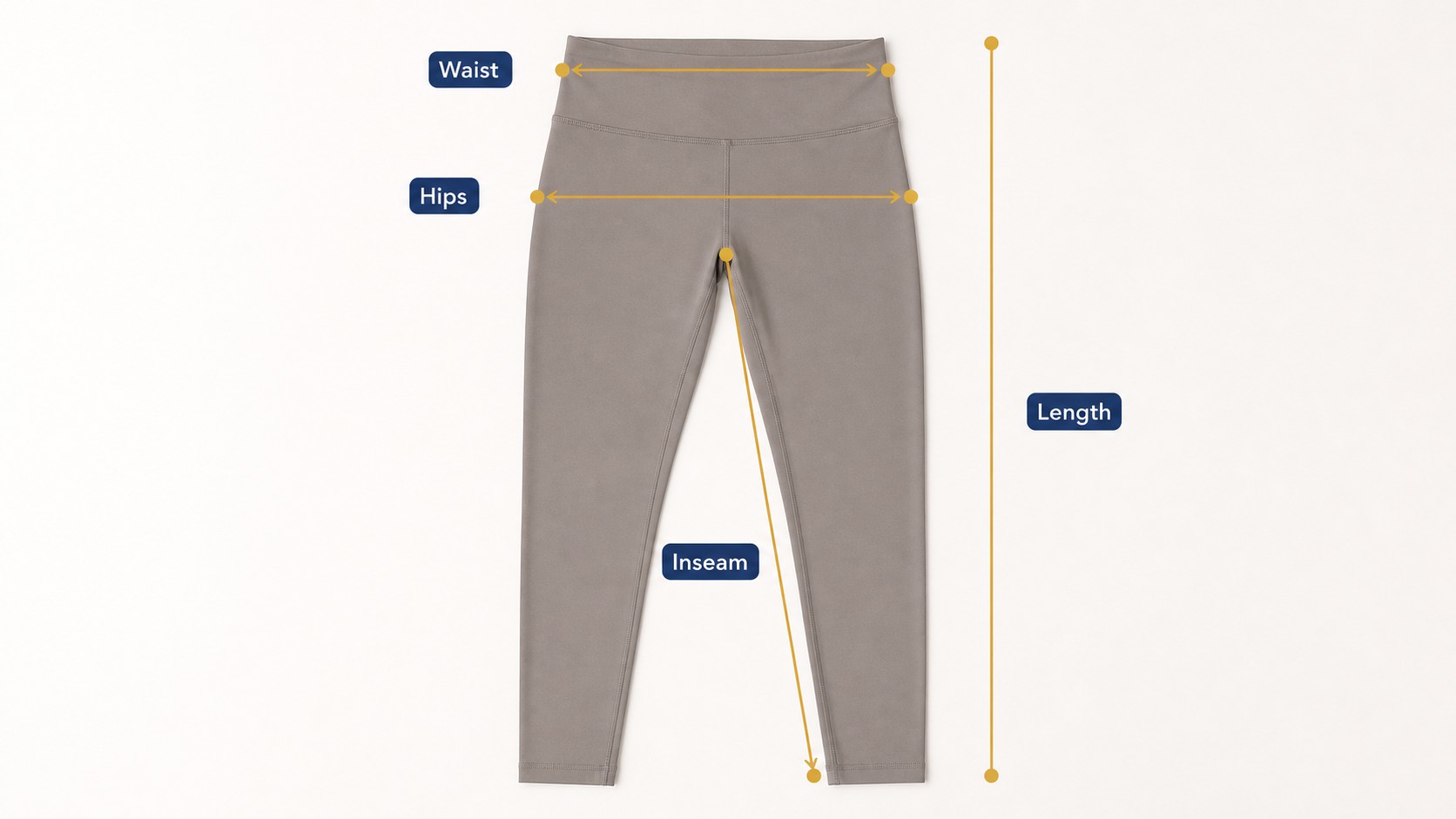
Getting the right leggings size starts with two core body measurements. These are the same measurements a factory uses to grade patterns and build a production-ready size chart.
1. Measure Your Waist
Wrap a flexible measuring tape around the narrowest part of your torso, roughly at belly button height. Keep the tape snug against the skin — not tight enough to compress, not loose enough to gap. Breathe normally and take the reading at the end of a natural exhale.
Rule of Thumb: The tape should stay in place without sliding down, but you should be able to fit one finger between the tape and your skin.
2. Measure Your Hips
Position the tape around the fullest part of your hips and glutes. Keep the tape parallel to the floor — a tilted tape adds extra inches and produces an inaccurate reading. Stand with your feet together for the most consistent result.
Factory Tip: Most leggings sizing discrepancies come from incorrect hip measurements. This is the single most important number to get right, because the hip measurement determines how the garment stretches across the widest part of the lower body.
3. Apply the General Sizing Rule
If your measurements fall clearly within one size range on the brand's chart, select that size.
If your measurements sit near the boundary of a larger size, and you prefer a more relaxed fit, choose the larger size.
If your hip measurement falls in a larger range than your waist measurement (the most common scenario), default to the hip measurement as the deciding factor. Leggings stretch more at the waist than they do across the hips.
Forcing a smaller size can cause seam stress and fabric overstretch, leading to premature wear or seam failure.
Buyer Check: Size transition zones (e.g., US 12, US 22) require extra attention. For a lean, athletic build, the standard size may still fit well. For a fuller hip-to-waist ratio, sizing up is the safer choice.
How Fabric Elasticity Impacts Leggings Size Selection
Fabric composition directly changes how a size chart maps to actual fit. The same size label in two different fabric types can feel entirely different on the body. Understanding this factor at the fabric level prevents the most common sizing mistake: assuming all leggings with the same size label fit the same way.
Standard Stretch Fabrics (High Tolerance)
Nylon-spandex, polyester-spandex, and cotton-spandex blends offer four-way stretch — the fabric extends in both width and length directions. These leggings accommodate the widest range of body shapes within a single size. If your measurements fall between two sizes, standard-stretch fabrics are forgiving enough that the smaller size may still provide a comfortable fit.
Common compositions: 75–85% nylon or polyester with 15–25% spandex/elastane.
Coated and Compression Fabrics (Restricted Stretch)
Coated leggings — metallic finishes, faux leather, high-compression performance fabrics — have a surface layer that restricts the base fabric's ability to stretch. Even if the underlying material is the same spandex blend used in standard leggings, the coating reduces the effective stretch range by 10–20%.
Rule of Thumb: For coated or compression leggings, compare your measurements to the size chart and select one size up from your standard-stretch legging size. The garment will fit closer to the body without being uncomfortably tight.
Cotton-Dominant Blends (Moderate Stretch, Less Recovery)
Cotton-heavy leggings (50%+ cotton content) have less recovery than synthetic blends. They stretch but do not snap back as effectively after wear. This means a cotton legging that fits perfectly when new may bag at the knees and waist after a few hours of wear. For cotton-dominant leggings, selecting a size that feels slightly snug at first try-on often produces a better long-term fit.
Common Mistakes When Choosing Leggings Sizes
1. Ignoring the Hip Measurement
Relying on waist measurement alone and ignoring the hip number is the single most frequent sizing error. Leggings stretch more at the waistband than they do across the hips and thighs. Avoid this by always comparing both measurements to the size chart and defaulting to the larger of the two if they fall in different size ranges.
2. Assuming All Size Charts Are the Same
A size Medium from one brand can match a size Large from another. This happens because brands build size charts around different target body shapes, fabric stretch properties, and grading rules. Avoid this by checking the specific brand's size chart for every purchase — never assume your usual size will fit across different brands or even different product lines within the same brand.
3. Overlooking Fabric Composition
The same body measurements produce different fits in standard nylon-spandex versus coated leggings. A size that fits perfectly in a basic matte legging may feel uncomfortably tight in a faux leather or metallic-coated version. Avoid this by checking the fabric composition before selecting a size and sizing up for coated or compression fabrics.
4. Choosing by "Usual Size" Without Measuring
Body measurements change over time. The size that fit six months ago may not be the right size today. Avoid this by taking fresh measurements before each new purchase or production run, especially if the order involves a new fabric or a new factory.
5. Skipping the Inseam
Leg length matters for both aesthetics and function. A petite customer in a standard-inseam legging gets ankle bunching; a tall customer gets an unintentional crop length. Avoid this by matching inseam length to body height, not just to waist and hip fit.
6. Misreading One-Size Claims
"One size fits most" does not mean "fits everyone." Each one-size category has a defined body measurement range. Trying to fit into a regular one-size when your measurements are in the plus range leads to fabric overstretch and discomfort. Avoid this by checking the stated size range for any one-size garment and selecting the category that covers your measurements.
Leggings Sizing Checklist for Brands
Before finalizing a leggings size chart for production, run through this checklist:
Waist and hip measurement ranges defined for every size in the grade
Inseam length specified for each size, with petite and tall variants if applicable
Fabric composition confirmed — size chart adjusted for coated vs. standard stretch fabrics
Waistband style (mid-rise / high-waisted / maternity) accounted for in the measurement-to-size mapping
One-size categories (if used) include explicit body measurement ranges
Size chart published in both inches and centimeters for international customers
Physical samples ordered in at least two sizes (e.g., S and XL) to verify grading consistency
Size chart source file accessible for factory QC team to reference during inline and final inspection
Get a Factory Quote for Your Custom Leggings
Accurate sizing starts at the factory level. Whether you are launching a new activewear brand, expanding into plus sizes, or recalibrating an existing leggings size chart, having a manufacturing partner that treats sizing as a production specification — not an afterthought — protects your brand from the cost of returns and unhappy customers.
SuhuCustom provides OEM/ODM custom leggings manufacturing with flexible MOQ, custom size chart development, fabric options across standard and coated finishes, and sample verification in 3–7 days. Test the fit on real bodies before scaling to bulk production.